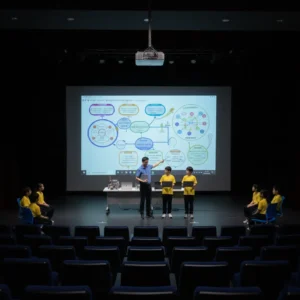

Artificial Intelligence is no longer a futuristic idea—it’s part of everyday life. From voice assistants to recommendation systems, AI surrounds us. That’s why introducing AI concepts to kids early is not just beneficial, but essential. When children understand how technology works, they become creators instead of passive users.
In this guide, you’ll learn why, how, and when to start teaching AI, using age-appropriate strategies that spark curiosity, creativity, and confidence. This article is designed for parents, educators, and edtech innovators who want to prepare children for a future driven by technology—without overwhelming them.
Why Introducing AI Concepts to Kids Matters
Preparing Children for a Digital Future
The jobs of tomorrow will require more than basic digital literacy. By introducing AI concepts to kids, we help them develop critical thinking, problem-solving skills, and computational reasoning—abilities that will remain relevant no matter how technology evolves.
AI literacy empowers children to:
- Understand how algorithms influence decisions
- Question technology instead of blindly trusting it
- Build confidence with complex systems
According to educational research shared by organizations like MIT Media Lab, early exposure to technology concepts increases long-term engagement and innovation.
Building Ethical Awareness from an Early Age
AI isn’t just about code—it’s about responsibility. Teaching kids how AI works also opens conversations about fairness, bias, privacy, and ethics. When introducing AI concepts to kids, we can shape not only future engineers, but thoughtful digital citizens.
How to Explain AI to Kids in Simple Terms
Use Everyday Examples They Already Know
Children interact with AI daily without realizing it. Start with familiar experiences:
- YouTube recommending videos
- Netflix suggesting shows
- Voice assistants answering questions
Explain AI as “a computer that learns from examples,” instead of complex technical definitions. This approach makes introducing AI concepts to kids feel natural and relatable.
Learn Through Play and Exploration
Play-based learning is one of the most effective methods for teaching technology.
Games and Interactive Tools
Platforms like Code.org offer free, kid-friendly activities that introduce logic, algorithms, and machine learning concepts without requiring prior knowledge.
Hands-On Experiments
Simple activities—such as training a model to recognize images or sounds—can turn abstract ideas into tangible experiences. This reinforces understanding while keeping learning fun.
Age-Appropriate Ways to Teach AI
AI for Kids Ages 5–7
At this stage, focus on storytelling and visuals.
Key Learning Goals
- Understanding patterns
- Recognizing cause and effect
- Learning that computers follow instructions
Use stories where AI characters “learn” from examples. This is a gentle way of introducing AI concepts to kids without technical complexity.
AI for Kids Ages 8–12
This is the ideal age to introduce basic logic and decision-making.
What They Can Learn
- What algorithms are
- How data influences outcomes
- Simple machine learning ideas
Projects like chatbot simulations or image recognition games work exceptionally well here.
AI for Teens
Older kids can explore real-world applications and ethics.
Advanced Topics
- Bias in AI systems
- How AI impacts society
- Creating simple AI-powered projects
At this stage, AI for kids becomes less about introduction and more about exploration and responsibility.
Benefits of Introducing AI Concepts to Kids Early
Cognitive and Creative Development
Learning AI strengthens:
- Logical reasoning
- Mathematical thinking
- Creative problem-solving
Kids begin to see technology as something they can shape, not just consume.
Confidence with Technology
When children understand how systems work, they’re less intimidated by complexity. This confidence translates into better performance across STEM subjects and beyond.
Future-Ready Skills
Introducing AI concepts to kids prepares them for careers that may not even exist yet. Skills like adaptability, data literacy, and ethical reasoning will define success in the AI-driven economy.
Common Mistakes to Avoid When Teaching AI
Overloading with Technical Jargon
Avoid terms like “neural networks” or “backpropagation” early on. Focus on concepts, not vocabulary.
Treating AI as Magic
Kids should understand that AI is created by humans and trained with data. This prevents misconceptions and encourages critical thinking.
Ignoring Ethics
Even simple discussions about fairness and privacy matter. Ethical awareness should grow alongside technical understanding.
Start the AI Learning Journey Today
The best way to begin is with a structured, kid-friendly environment designed specifically for young learners. If you’re ready to take the next step, explore our interactive programs and community.
Start your child’s AI journey today
Frequently Asked Questions (FAQs)
1. What is the best age for introducing AI concepts to kids?
Children as young as 5 can begin learning basic AI ideas through stories, games, and visual examples.
2. Do kids need coding skills to learn AI?
No. Introducing AI concepts to kids can start without coding. Logic, patterns, and examples come first.
3. Is AI for kids safe?
Yes, when taught responsibly with age-appropriate tools and adult guidance.
4. How long does it take for kids to understand AI basics?
With consistent exposure, kids can grasp core ideas within weeks through play-based learning.
5. Can AI improve creativity in children?
Absolutely. AI encourages experimentation, storytelling, and innovative thinking.
6. What tools are best for teaching AI to kids?
Platforms like Code.org and educational programs designed for children are excellent starting points.
7. How does learning AI help in school?
AI learning improves math, logic, reading comprehension, and problem-solving skills.
8. Why is introducing AI concepts to kids important for the future?
Because AI will shape nearly every industry, early understanding ensures children are prepared, confident, and ethical users and creators.