In early 2026, students at Bukit View Primary School did not just learn about Artificial Intelligence — they built with it. Here is what happened when The Young Maker brought hands-on AI education into the classroom.
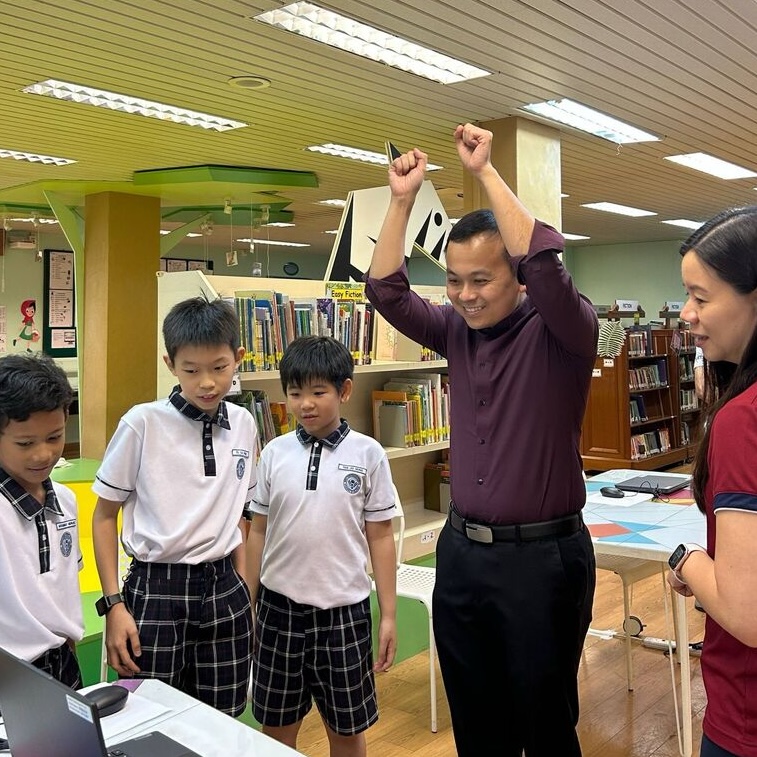
What if 10-year-olds could teach a computer to recognise sign language? What if Primary 5 students could build an AI companion to help elderly people feel less lonely? At Bukit View Primary School in Singapore, these were not hypothetical questions — they were the projects students chose to build.
From January to March 2026, The Young Maker ran a hands-on Artificial Intelligence programme with Primary 4 and Primary 5 students. By the end, every student had trained their own machine learning model and presented a working AI prototype — all centred on a real-world theme: Inclusivity for Elderly Care and Special Needs.
Rather than following a textbook, students progressed through four interconnected themes — each building their understanding and confidence before the next.
Students explored what AI is, how it appears in everyday life, and how machines learn to recognise patterns.
Using real data they collected themselves, students trained image and gesture recognition models from scratch.
Students connected their trained models to interactive platforms, designing prototypes that respond to different AI-detected inputs.
Every student presented their completed project — explaining their model and communicating the problem they set out to solve.
On Presentation Day, students worked in groups to design, build, and demo an original AI prototype. The brief: how might we use AI to support elderly people or those with special needs?
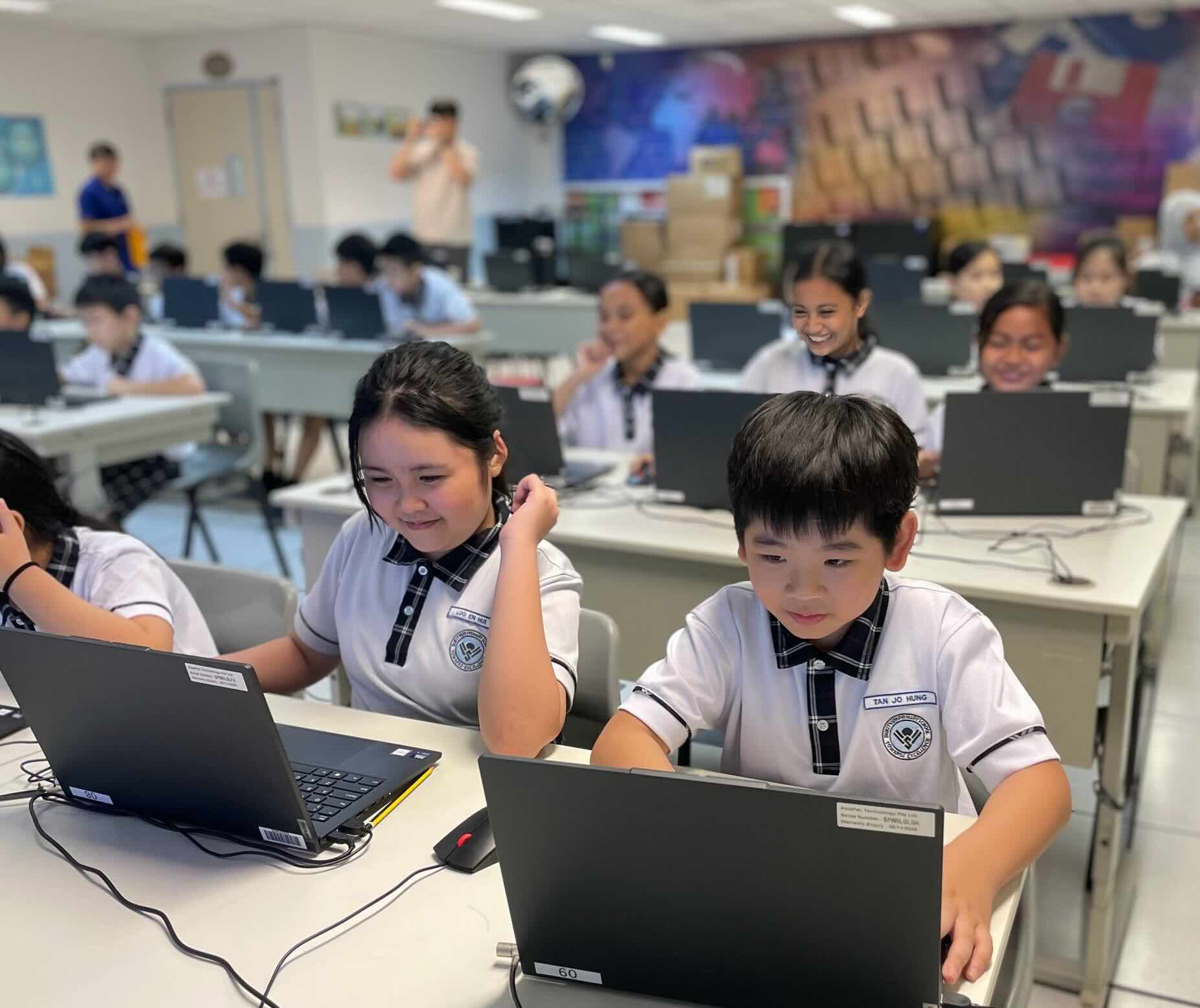
Trained an AI to recognise hand signs for each letter of the alphabet — helping deaf learners practise sign language interactively.
Extended sign language recognition to include animal signs — giving deaf learners a broader vocabulary with AI-powered feedback.
A searchable AI tool that shows the correct sign for any word — so anyone can communicate with a deaf person without prior knowledge.
An AI that detects three emotional states — happy, angry, and scared — using facial recognition to support emotional wellbeing.
Detects facial expressions of elderly users and responds with personalised words of encouragement — designed to reduce loneliness and provide emotional support.
Without being directed toward it, every group independently chose to build tools that help people who struggle to be understood — whether through sign language barriers or the isolation of old age. That kind of empathy-driven thinking is exactly what AI education at the primary level should produce.
By the end of the programme, students had developed skills that go well beyond a standard technology lesson.
| Technical Skills | Future-Ready Skills |
|---|---|
| Collecting and labelling training data | Design thinking and problem framing |
| Training image and gesture recognition models | Empathy — building technology for real human needs |
| Testing and improving model accuracy | Presentation and communication skills |
| Understanding AI bias and data quality | Critical thinking about AI and its limits |
| Building interactive AI applications | Confidence in STEM and self-directed learning |
These are the projects and reflections from the students themselves — in their own words.
Singapore Smart Nation initiative identifies AI literacy as a national priority. At Bukit View Primary, students did not study AI from a textbook. They collected data, trained models, watched their AI fail, figured out why, and improved it.
When Sonia presents her Elderly Companion AI, or when Dwaraka demonstrates a sign language recognition tool she built herself, something important shifts. These students stop seeing technology as something that happens to them — and start seeing it as something they can shape. That is what AI education at the primary level is really for.
The Young Maker school AI programme is available for Primary and Secondary school students, fully customisable to your school theme and curriculum needs.
Enquire About The Young Maker AI ProgrammeWant a programme like this at your school?
The Young Maker runs coding, robotics and AI programmes in schools. Email us and we will get back to you. Parents can also book a trial class at our Kovan centres.
Email us about school programmesBook a trial class | AI for Kids